How to Plan a Trip to Italy: Trains, Stays, and Sights
By TripNoted · November 17, 2026
An Italy trip comes together when the travel days, hotel nights, and must-see sights fit the same calendar. Choose where you arrive and leave, set a manageable city sequence, then check museum tickets and the exact stations on your rail journeys. Once those pieces connect, you can fill the gaps with the cafés, walks, and neighborhoods you want to enjoy.

Start with your first and last city
Write down the local arrival date, arrival airport or station, and your confirmed departure point. A route that finishes in Venice is a different plan from one that must return to Rome for a flight home.
Next, choose the places that matter most to you. For a first outline, give each city enough nights to make the move worthwhile. Our three-day Rome itinerary shows how to group the main sights by area. A longer list of cities also means more check-outs, luggage trips, and station transfers. Keep a few ideas optional while you check what fits.
Count nights separately from sightseeing days. An overnight flight may bring you to Italy on the day after you leave home, and a morning flight home leaves little room for a final city visit. For passport and other preparation tasks, use our international travel checklist.
Check your priority sights before filling every day
Make a short list of the visits you would be disappointed to miss. Open each venue’s official ticket page, check the calendar for your dates, and record whether a reservation is required or simply useful.
For the Colosseum, entry requires a reserved time slot. Check the current ticket options and instructions before giving that day a fixed shape. Keep the visitor and ticket details together, including the entry requirements shown for your chosen ticket.
The Uffizi describes advance booking as optional and recommends it to reduce waiting during busy periods. That is a different decision from a visit that requires a reservation. Check the rules for the ticket you actually choose.
Put confirmed visits in your calendar first. Then group nearby walks, meals, and optional stops around them. Avoid attaching a hard-to-change museum visit to an intercity arrival until you have checked the actual train and local transfer.
Book the station, not just the city name
Read the full station name in the train search before you choose the hotel area or arrange a pickup. A city can have several stations, and the one on your ticket is the one your arrival plan needs.
- Rome: Termini and Tiburtina are different stations with different locations and connections.
- Florence: you may see Firenze Santa Maria Novella, often shortened in searches. Match the full name to your ticket.
- Venice: Venezia Santa Lucia and Venezia-Mestre are separate arrival choices. Check which one fits the property you book.
Operator pages such as Italo’s station list can help you recognize the names. Use the live search and final ticket to confirm the station for your particular service.
Save the journey from the station to your accommodation as its own part of the day. Include the property address, the meeting point for any arranged transfer, and a little room to handle bags and find your way.
Follow the instructions for your exact train ticket
Do not apply one check-in or validation rule to every Italian train. The operator and ticket type matter.
Trenitalia’s regional ticket guide distinguishes digital, electronic, and paper products. Its Digital Regional Ticket activates at the selected train’s scheduled departure; its paper regional ticket needs validation before departure. Read the instructions that come with your purchase.
Italo says its passengers do not need to check in. Keep the ticket ready for any station checkpoint and for staff on board. A booking confirmation and the provider’s required travel ticket may be separate things.
Keep the service date, station names, booking reference, and any carriage or seat details easy to find. Our guide to organizing train bookings gives you a useful record to work from.
Match hotel arrival details to the travel day
For each stay, check the property’s own check-in hours, late-arrival process, and bag-storage arrangements. If your train arrives before the room is ready, decide what you will do with your luggage before booking a fixed-time visit.
A hotel’s FAQ can answer this early. For example, Hotel President Venezia lists luggage storage on arrival and departure days. Find the equivalent details for your own stay and save any instructions the property sends you.
Read the final travel day backward from the departure time. Connect the last hotel check-out, the airport or station transfer, and the outbound ticket. If you expect to arrive late at a property, follow our late hotel check-in checklist.
Example: seven nights from Rome to Venice
This planning example arrives in Rome on Day 1 and leaves from Venice on Day 8. It assigns every night before adding sightseeing times.
| Nights | Stay | Connect these bookings |
|---|---|---|
| 1–3 | Rome: three nights | Arrival, the Rome stay, and any reserved Colosseum visit. |
| 4–5 | Florence: two nights | Rome check-out, the booked rail journey, and Florence check-in on Day 4. |
| 6–7 | Venice: two nights | Florence check-out, the exact Venice arrival station, and the next stay on Day 6. |
| Day 8 | Departure | The last check-out, transfer, and outbound ticket. |
Three plus two plus two gives you seven hotel nights. The transfer days still need actual services and arrival arrangements. If your flight leaves from Rome instead, change the final-night plan and check the return connection before filling the last day.
Keep the connected plan in TripNoted
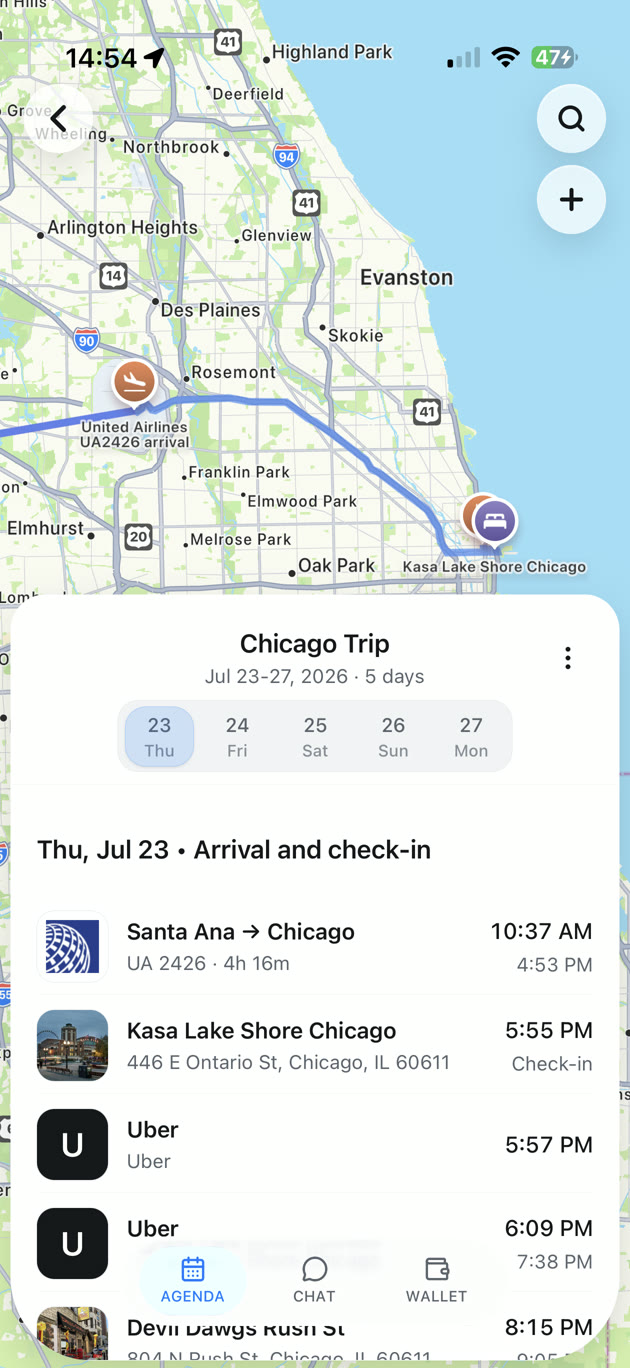
As you book, bring the confirmations into one itinerary. TripNoted can turn recognized recent booking emails into organized trip plans. You can connect Gmail or create the trip and add plans manually; Gmail is optional.
See the train and the next stay together
Keep your flights, hotels, trains, and activities in one agenda. Check the Florence arrival beside the hotel check-in, add any missing transfer, and leave optional stops around your fixed bookings.
Manual plans, recognized recent Gmail imports, and shared editing are included for free. Use the web app to prepare on a larger screen, and give your companion view or edit access to the trip.

Saved trip details are available offline on iPhone too. Open the trip while connected before departure, check that the details you need are on the phone, and keep the provider’s required tickets available as well.
Your Italy booking checklist
| Before you book | Check this | Keep with the itinerary |
|---|---|---|
| The route | Arrival city, departure point, and the number of nights. | The first and last travel days. |
| A priority sight | Official opening calendar, reservation rule, and ticket conditions. | The confirmed date, entry time, and accepted ticket. |
| A train | Operator, full station names, service date, and exact ticket instructions. | The reference and any seat or carriage details. |
| A stay | Location, check-in date, arrival process, and luggage arrangements. | The address and the property’s arrival instructions. |
| The final day | Check-out, transfer, and outbound departure time. | A complete path from the last stay to departure. |
When those connections work, enjoy filling the space between them. Keep a nearby walk or café as an option, rather than making every part of the day a fixed appointment.
Questions about planning an Italy trip
Does every Italian train ticket need validation?
No. Rules differ by operator and ticket product. Follow the instructions for the exact ticket you buy, including any activation or validation step. Keep the travel ticket available rather than relying only on a saved booking reference.
Do all museums require advance reservations?
No. The Colosseum requires a reserved time slot, while the Uffizi describes advance booking as optional for the visit covered by its rules. Check each venue’s official page and your chosen ticket type.