How to Plan a Trip to Japan: What to Book and When
By TripNoted · November 15, 2026
Start your Japan trip with your arrival and departure dates, a short list of city bases, and a count of every hotel night. Check the ticket calendars for your must-do experiences before you lock the route. Then fit hotels, trains, and daily plans around those decisions. You’ll have a trip that connects, with room left for discoveries along the way.

1. Set your travel dates and count nights in Japan
Look at the local arrival date on your flight, not only the day you leave home. Then write down the departure airport, date, and time. Those details tell you how many nights you need and how much of each travel day you can use.
Start with two or three priorities: perhaps Tokyo neighborhoods, a Kyoto stay, and one museum you really want to visit. Keep the first route simple enough that you can enjoy each stop. You can add optional places after the main bookings fit.
Check passport, entry, and transit requirements for your own route early. Our international travel checklist puts those preparation tasks in order.
2. Check must-do ticket calendars before fixing the city order
A particular museum, theme park, performance, or overnight stay may shape the route more than a long list of sights. Open the official booking page for each priority and record three things: the dates it opens, when tickets go on sale, and whether admission has a fixed entry time.
For example, the Ghibli Museum requires advance reservations. Check its calendar and current official notices before choosing your visit day. A closure or ticket-process change can affect the plan.
At Universal Studios Japan, park admission and timed access to an area can involve separate steps. Read the official area timed-entry instructions for the ticket process you intend to use. Keep the rest of that day flexible until you know what access you have.
Give each priority a simple status: idea, waiting for sales, or confirmed. A place on your wish list is still an option until you have the required reservation. If it is essential to the trip, check its availability before committing to bookings you cannot change.
3. Match every hotel night to your route
Once the city order works, place the stays. Check both the city and the check-in date at each change of hotel. On a transfer day, you check out of one stay and check into the next; you still need a room that night.
Use the station or arrival point you will actually use when choosing the hotel area. Think about luggage, the walk to the property, and the next morning’s plans. JNTO notes that popular cities can fill during peak seasons, so check room availability while the route is still easy to adjust.
Example: seven nights with Tokyo and Kyoto as your main bases
Here is a simple night count for a trip that arrives and departs through Tokyo. Day 1 is the local arrival day. It has three stays, including a return night in Tokyo.
| Nights | Stay | What to connect |
|---|---|---|
| 1–3 | Tokyo: three nights | Airport arrival, the first hotel, and Tokyo plans. |
| 4–6 | Kyoto: three nights | Tokyo check-out and the Kyoto check-in on Day 4. |
| 7 | Tokyo: one night | The return journey and a hotel chosen around the departure airport. |
| Day 8 | Departure | Hotel check-out, airport transfer, and the flight. |
That is four Tokyo nights and three Kyoto nights: seven in total. Choose actual trains and hotels for your dates before placing timed activities on the transfer days. If you depart from another city, change the final stay and count again.
4. Choose rail tickets after you know the journeys
List each intercity journey with its date, origin, and destination. Then compare separate tickets, a regional pass, and a national pass against those exact journeys. A pass is useful only if its coverage and cost fit your route.
JNTO’s rail guide explains the mix of JR trains, private railways, subways, and local transport. Check the Japan Rail Pass coverage and exceptions rather than assuming one pass covers every ride.
Regional passes have boundaries too. For example, the Kansai WIDE Area Pass does not cover the Tokaido Shinkansen between Shin-Osaka and Tokyo. Compare the pass map with each segment before buying.
Check the booking rules for your operator and ticket. SmartEX serves the Tokaido, Sanyo, and Kyushu Shinkansen; a reservation made far ahead can have a tentative timetable and a later confirmation step. Its Shinkansen ticket does not include the local train to or from the station. Plan those local connections as well.
Keep the train date, stations, ticket reference, and any seat details with your booking. Our train booking guide shows which details are useful on travel day.
5. Bring the bookings together in TripNoted
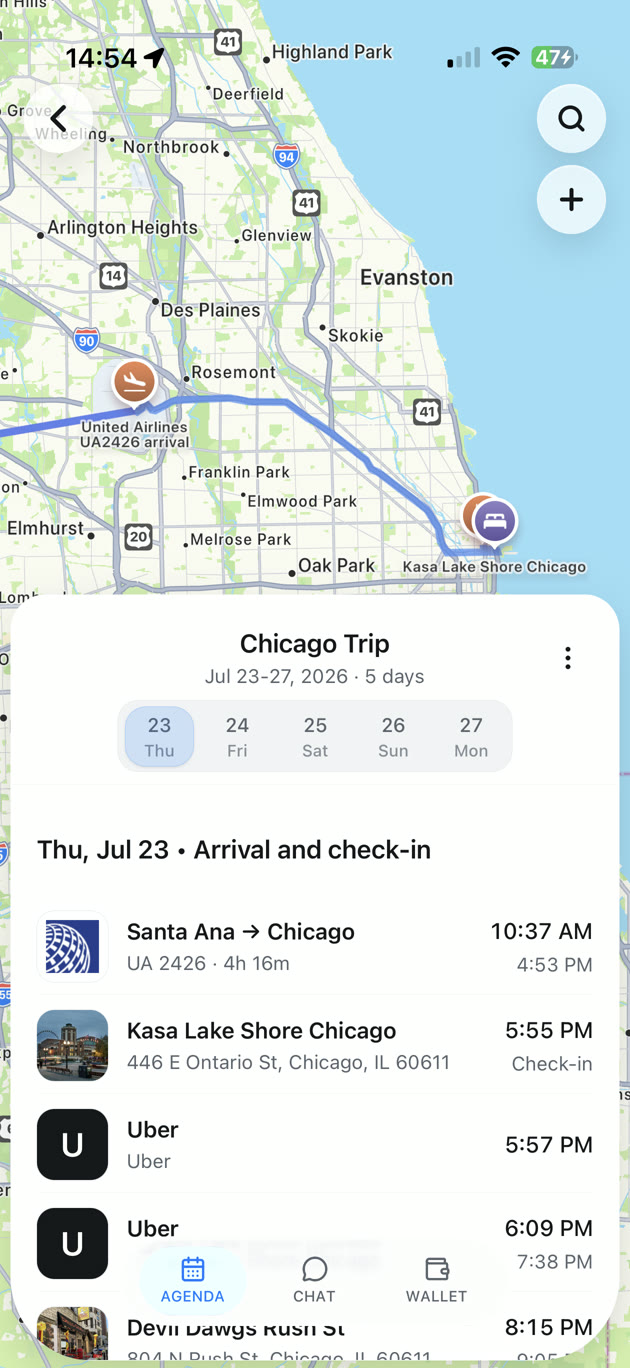
As confirmations arrive, turn the outline into one itinerary. With TripNoted, recognized recent booking emails can become organized trip plans automatically. Gmail is optional: you can also create the trip and add plans manually.
See the next stay beside the journey that gets you there
Keep flights, hotels, trains, and activities in the same agenda. Review the Tokyo check-out and Kyoto check-in together, then fill any missing connection. Manual plans, recognized recent Gmail imports, and shared editing are included for free.
Use the web app to prepare on a larger screen. Share view or edit access with your companion, so you can work from the same plan.

Saved trip details are available offline on iPhone too. Open the trip while connected before departure and check the information you need. Keep the actual tickets required by each provider ready as well.
Your Japan booking checklist
| Decision | Check before you commit | Then add |
|---|---|---|
| Flights and dates | Local arrival date, departure airport, and any essential fixed-date experience. | The number of nights and your city outline. |
| Must-do experiences | Official opening calendar, ticket sales, entry time, and current notices. | The confirmed visit on a suitable day. |
| Hotels | The city for every night, check-in dates, location, and change terms. | Each stay beside the journey that reaches it. |
| Rail | Exact route, operator, pass coverage, reservations, and local connections. | The confirmed service and ticket details. |
| Daily plans | Fixed bookings, opening days, travel time, and room for a break. | Nearby optional stops that are easy to change. |
Fill the spaces around confirmed plans with places in the same area. Leave arrival days and long transfer days light until you have checked the actual connections. One flexible afternoon can be more useful than another timed ticket.
For maps, translation, and rail tools, see our Japan travel apps guide. Use those tools alongside your itinerary, with the current provider ticket and timetable as the source for the journey.
Questions about planning a Japan trip
Do I need a Japan Rail Pass for a first trip?
No. Start with the journeys you will take, then compare the available tickets and passes. Check exact coverage, service restrictions, and any extra charges. A familiar route does not automatically make a national pass the best choice.
Should I book every day before I go?
Confirm the stays, essential journeys, and experiences that require reservations. Keep ordinary sightseeing and meals flexible where you can. Check opening days before assigning an optional place to a particular day.
Is seven nights enough to see all of Japan?
Use a seven-night trip for a focused route rather than trying to cover the whole country. The example above shows how hotel nights and transfers fit together. Choose the places that matter most to you and leave the rest for another trip.