Travel Packing Checklist: Pack for the Trip You’re Taking
Updated November 12, 2026
Start with your actual trip days and activities. Add the clothes and everyday gear each one needs, then choose what to keep, skip, repeat, wash, and pack. The table below is a worked example you can copy into your notes and change for your trip. Use this checklist for clothing and everyday travel gear.
Make a packing list from your itinerary
A general list can remind you of common items, but it cannot know whether you have a long walking day, a dinner reservation, a pool, or a chance of rain. Build your travel packing checklist around those plans. Then count each item once, even if you use it for more than one activity.
- Write down the trip facts. Note the number of days and nights, your route, expected weather, laundry access, and the bag you plan to use. For a flight, check your airline’s current baggage rules before you choose a bag. The FAA baggage tips also direct travelers to check an airline’s carry-on item and size rules.
- List each activity or travel day. Use real plans such as a travel day, a city walk, a formal dinner, or a pool visit. Add a row for a likely weather need only when it changes what you will carry. Leave out activities you do not expect to do.
- Count items by use. Decide how many fresh tops, bottoms, socks, and other items you want for the trip. Mark anything you will wash or repeat. Reuse is a choice: do not assume you want to wear an item again just because it could be worn twice.
- Check the bag before you pack. Keep the items that serve a planned use. Skip duplicates and “maybe” items that have no activity, weather, or comfort reason. If your choices do not fit, remove the least useful item or choose a larger bag that meets your airline’s rules.
Use the last column to record the decision and the count. Add a bag-space note for bulky items or extra shoes. Copy the table into your notes, rename the activities, change each count, and delete rows that do not fit your plans.
Check everyday essentials once: ID and travel documents needed for your trip; phone and charger; toothbrush and usual toiletries; socks, underwear, and sleepwear.
Worked example: a three-night city break
Imagine a four-day city trip with three nights, no planned laundry, a walking day, one nice dinner, and a travel day at each end. Rain is possible, and the hotel may have a pool. The traveler wants a clean top each day and is comfortable repeating each pair of trousers once. The counts below follow those choices.
| Trip activity | Items | Keep, skip, or count |
|---|---|---|
| Day 1: travel and arrival | Top, dark trousers, walking shoes, phone charger | Wear 1 of 4 tops, 1 of 2 trousers, and 1 pair of shoes. Pack 1 charger. |
| Day 2: long city walk | Top, walking trousers, walking shoes | Wear 1 top and the second pair of trousers. Reuse the shoes. |
| Day 3: sightseeing and nice dinner | Top, dark trousers, dinner layer or accessory | Wear 1 top. Repeat the dark trousers. Add 1 dinner layer only if the outfit needs it. |
| Day 4: travel home | Top, walking trousers, walking shoes | Wear the last top. Repeat the walking trousers and shoes. |
| Every day: personal clothing choice | Socks and underwear | For 1 fresh set per day, count 4 pairs of each total: wear 1 set on Day 1 and pack 3. |
| If rain fits the forecast | Light rain layer | Keep 1 if the forecast and walking plans make it useful; otherwise skip it. |
| If a pool visit is planned | Swimwear | Keep 1 set if you plan to swim; otherwise skip it. Add a towel only if your plan requires one. |
The total is four tops (wear one on Day 1 and pack three), two pairs of trousers (wear one on Day 1 and pack one), one pair of shoes worn, and one phone charger. Four pairs each of socks and underwear includes the set worn on Day 1, so pack three of each. Each pair of trousers gets used twice, with a different pair on each consecutive day. Keep the optional rain layer or swimwear only when the forecast or plan gives it a reason. If you want a new pair of trousers each day, add two; if you will wash clothes, lower the count to match your plan.
Now change the example to match your trip. A beach day may need different clothes from a museum day. A dress code may change the dinner row. A cold forecast may replace a light layer with warmer clothing. If you add an activity, add its items and check whether they already appear in another row.
Use TripNoted to review the days and bookings
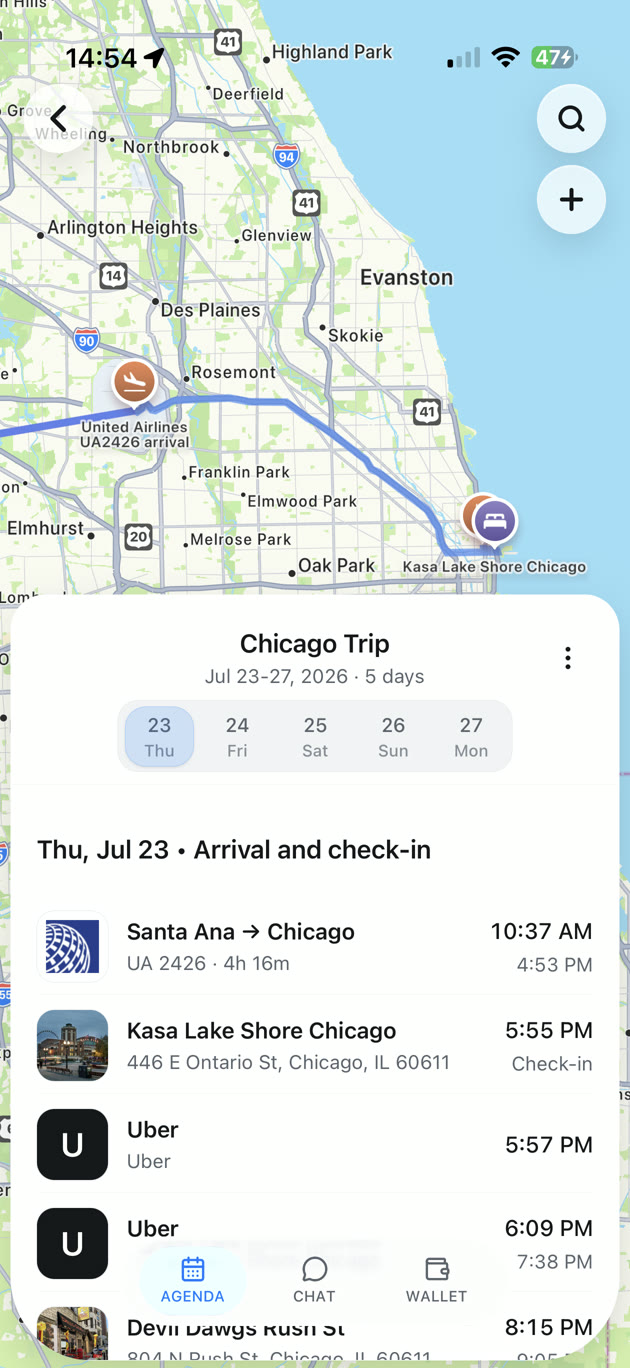
Keep your packing checklist in your notes; use TripNoted to see the days and bookings you are packing for. TripNoted Free supports manual trips and itinerary edits, and Gmail is optional. Review your travel days, stays, and activities, then adjust your own list around them.

Choose a packing method you will update
The best method is the one you can adjust when a plan changes. Keep one copy for this trip, and remove anything that no longer has a clear use.
| Method | Useful when | Keep in mind |
|---|---|---|
| Notes app | You want a quick list you can copy and change on your phone. | Write the trip dates and activity counts into the note so it stays specific. |
| Spreadsheet | You repeat similar trips or want to compare counts. | Make a new copy and remove rows that do not fit this trip. |
| Printed list | You prefer to mark items by hand while packing. | Leave space to cross out extras and write a changed count. |
For related planning, see the final trip checklist, how to make a flexible itinerary, and how to prepare an itinerary for offline use.
Common questions
How many clothes should I pack for four days?
Start with the number of fresh outfits you want, then count the bottoms you plan to reuse or wash. In the example above, four tops cover four days and two pairs of trousers work because the traveler is comfortable wearing each twice. Change those counts to match your own habits.
Should I pack for every possible weather change?
Use the forecast and activities to choose a useful layer. Add one item that covers a likely need; skip several backup items that do the same job. Check the forecast again before you leave and update the row if your plans change.
What should I change when a trip plan changes?
Update the activity row first, then check any item used for more than one activity. Change its total count once, review the bag-space note, and remove anything the new plan no longer needs.