3 Days in Tokyo: A Practical Itinerary for a First Visit
By TripNoted · November 27, 2026
Spend one day in Asakusa and by the Sumida River, one in Harajuku and Shibuya, and one in Ueno. This gives you three full days to explore Tokyo, with arrival and departure on separate days. Put Ueno on a day the Tokyo National Museum is open, then fit the other days around it.
Three days in Tokyo at a glance
| Day | Stop order | Check first |
|---|---|---|
| 1 | Sensō-ji, Sumida River Walk, Tokyo Skytree if you want to go up | Check visibility and ticket availability before you book the tower. |
| 2 | Meiji Jingu, Harajuku, Shibuya Crossing | Check the shrine’s closing time for your month. |
| 3 | Ueno Park, Tokyo National Museum, Ameyoko | The museum usually closes on Mondays. Check your date. |
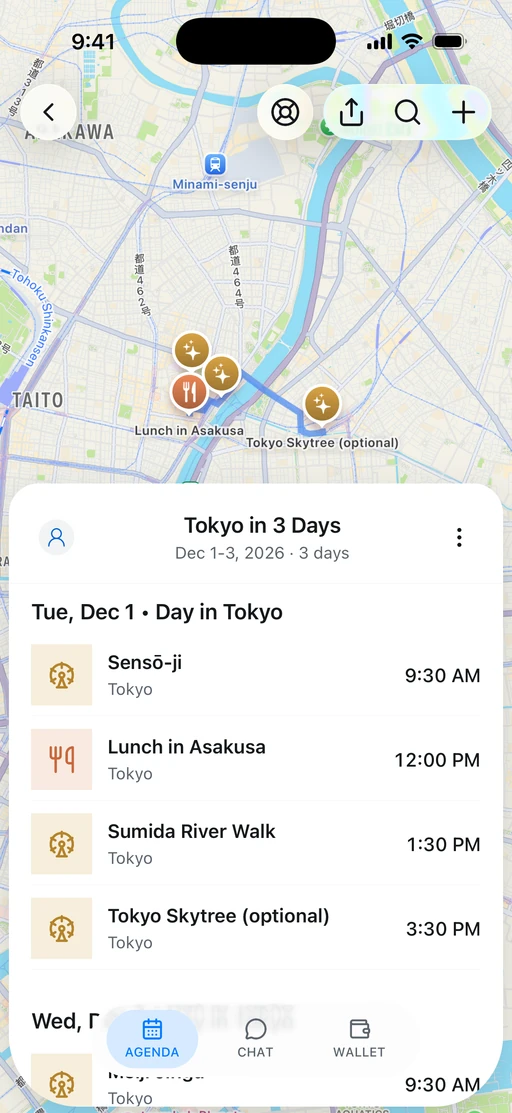
Tokyo sightseeing map
Day 1. Asakusa and the Sumida River
Start at the Kaminarimon gate in Asakusa. Walk along Nakamise to the main hall of Sensō-ji. Leave time to look around the temple grounds, then stop for a snack or follow a side street for lunch. If the main hall is a priority, check its hours separately from those of the grounds.
From Asakusa, head to the Sumida River Walk, a pedestrian bridge beside the railway. Cross toward Tokyo Mizumachi and continue east to Tokyo Skytree Town. If you book a tower slot, leave lunch open and set aside about 30 minutes to walk from Asakusa, pause by the river, and find the entrance. You can also stay at ground level and keep the afternoon open.
If visibility is poor or the decks are sold out, stay in the same area. Sumida Aquarium is inside Tokyo Skytree Town, with its own tickets and a fifth-floor entrance. In heavy rain, you can take the Tobu Skytree Line from Tobu Asakusa to Tokyo Skytree Station and go straight to the complex.
Sensō-ji visitor information · Sumida River Walk · Tokyo Skytree tickets · Sumida Aquarium hours and access
Day 2. Meiji Jingu, Harajuku, and Shibuya
Enter Meiji Jingu from the Harajuku side in the morning. Allow at least 10 minutes from the entrance to the main buildings, plus time to walk back. The shrine opens around sunrise and closes around sunset, with hours that change by month. The museum and inner garden have their own hours and admission.
Back in Harajuku, try Takeshita Street for shops and snacks. If the crowds slow you down, pick one stop there and use the rest of the time for lunch. Leave the afternoon for Shibuya. Walk south or take the JR Yamanote Line one stop to Shibuya if you want to save your feet.
At Shibuya Station, follow signs for Hachikō. Cross when the signal changes, then find a spot out of the pedestrian flow to watch the next crossing. Continue into Center Gai for food or shops. If you want to stay until the signs light up, leave dinner open in Shibuya and go back to the crossing afterward.
Meiji Jingu hours · Takeshita Street · Shibuya Crossing
Day 3. Ueno Park, Tokyo National Museum, and Ameyoko
Enter Ueno Park from the station side and walk to the Tokyo National Museum. Pick one or two galleries before you go. The Honkan is a good place to start for Japanese art. Check which galleries are open that day. A special exhibition can have separate admission. Leave suitcases at your hotel or in storage before you go, and allow time for the entrance security check.
After the museum, walk back toward Ueno Station and continue into Ameyoko. The market follows the railway toward Okachimachi. Try a lunch counter or browse the food shops and take your time. Individual opening hours vary, so check ahead if you have a particular shop in mind.
Tokyo National Museum hours and admission · Ameyoko market
Set the museum day before you buy tickets
- Check the museum calendar for your actual dates. For Saturday to Monday, you can visit Ueno on Sunday and move Harajuku and Shibuya to Monday. If Monday is a public holiday, the museum normally opens that Monday and closes the following day. Check for holiday or maintenance exceptions.
- Keep the tower optional unless the view is a priority. If you want a specific slot, check the official ticket site before you set the rest of Day 1. If the forecast looks poor and you have yet to book, keep the aquarium as your indoor option. If you already have a tower ticket, check its cancellation terms before you switch.
- Leave arrival and departure outside these three days. On arrival, take a walk and eat near your hotel. On departure, decide when to collect your bags and leave for the airport, then use any spare time for a nearby stop you can leave easily.
Where to stay for three days in Tokyo
Keep one hotel for the whole stay. Ueno is a practical base if you want easy access to the museum and a direct Ginza Line ride to Asakusa or Shibuya. For the shrine morning, check your route to Harajuku or Meiji-jingumae. Choose the hotel based on the station entrance you will actually use, especially if you will have luggage.
Keep your Tokyo plans together in TripNoted
Create a Tokyo trip in the TripNoted web app and add your places to each day. Put confirmed visits next to flexible plans like the river walk, lunch, or the aquarium. You can add plans manually and share the trip with a companion for free.
On iPhone, open the trip while connected before you go so you can use supported saved itinerary details offline. Keep the tickets you need for entry available separately.